
There is a specific kind of magic when you first open a jewelry box. The way the light catches a new faceted stone, or the mirror-like gleam of polished gold. We buy jewelry to mark milestones, celebrate love, or simply to feel beautiful. These pieces are investments—both financial and emotional.
Yet, so many of us unintentionally sabotage our own collections.
We treat fine jewelry like fast fashion, assuming that because metal is hard, it is indestructible. It isn’t. Dullness, scratched surfaces, loosened prongs, and tarnished chains are rarely caused by age; they are caused by daily habits.
If you want your modern heirlooms to look as brilliant in ten years as they did on day one, you need to adopt a maintenance mindset. It’s easier than you think.
Here are the five golden rules of jewelry care that most people break—and how to fix them today.
1. The “Last On, First Off” Rule
This is the single most important habit to develop. We often finish getting dressed, put on our jewelry, and then do a final spritz of perfume or hairspray.
This is a recipe for disaster.
Why you’re breaking it: Cosmetics, perfumes, lotions, and hairsprays contain chemicals that can wreak havoc on jewelry. They create a stubborn, filmy buildup that dulls the brilliance of diamonds and gemstones instantly. More seriously, certain chemicals can damage porous gems like pearls, turquoise, or opals, and even accelerate tarnishing on silver and lower-karat gold.
The Fix: Your jewelry should be the absolute final touch to your outfit, put on only after your lotion has absorbed and your perfume has dried. At the end of the day, take your jewelry off first before applying nighttime creams or washing your face.
2. Stop Showering and Swimming in Your Jewelry
We get it. You love your pieces and never want to take them off. But water isn’t as benign as it seems, especially when it’s mixed with other elements.
Why you’re breaking it:
- The Shower: Soap scum, shampoos, and conditioners leave a residue behind settings and under stones that is incredibly difficult to remove, killing the sparkle.
- The Pool: Chlorine is a harsh chemical that can actually damage gold alloys over time, making the metal brittle and prone to cracking.
- The Ocean: Saltwater is corrosive to many metals and leaves a sticky residue. Furthermore, cool water shrinks your finger size slightly, making it prime time for rings to slip off into the abyss.
The Fix: Install a small, safe ring dish in your bathroom or on your bedside table. Make it a ritual to place your pieces there before bathing or heading for a swim.
3. The “Kitchen Sink” Cleaning Method is Ruining Your Pieces
When your ring looks dull, do you grab an old toothbrush and some toothpaste? Or perhaps some baking soda? Please stop immediately.
Why you’re breaking it: Toothpaste is abrasive. It is designed to scrub enamel, and on jewelry, it acts like fine sandpaper. It creates microscopic scratches on the surface of gold and silver, ruining that high-polish finish over time. Baking soda can be similarly too harsh for many settings.
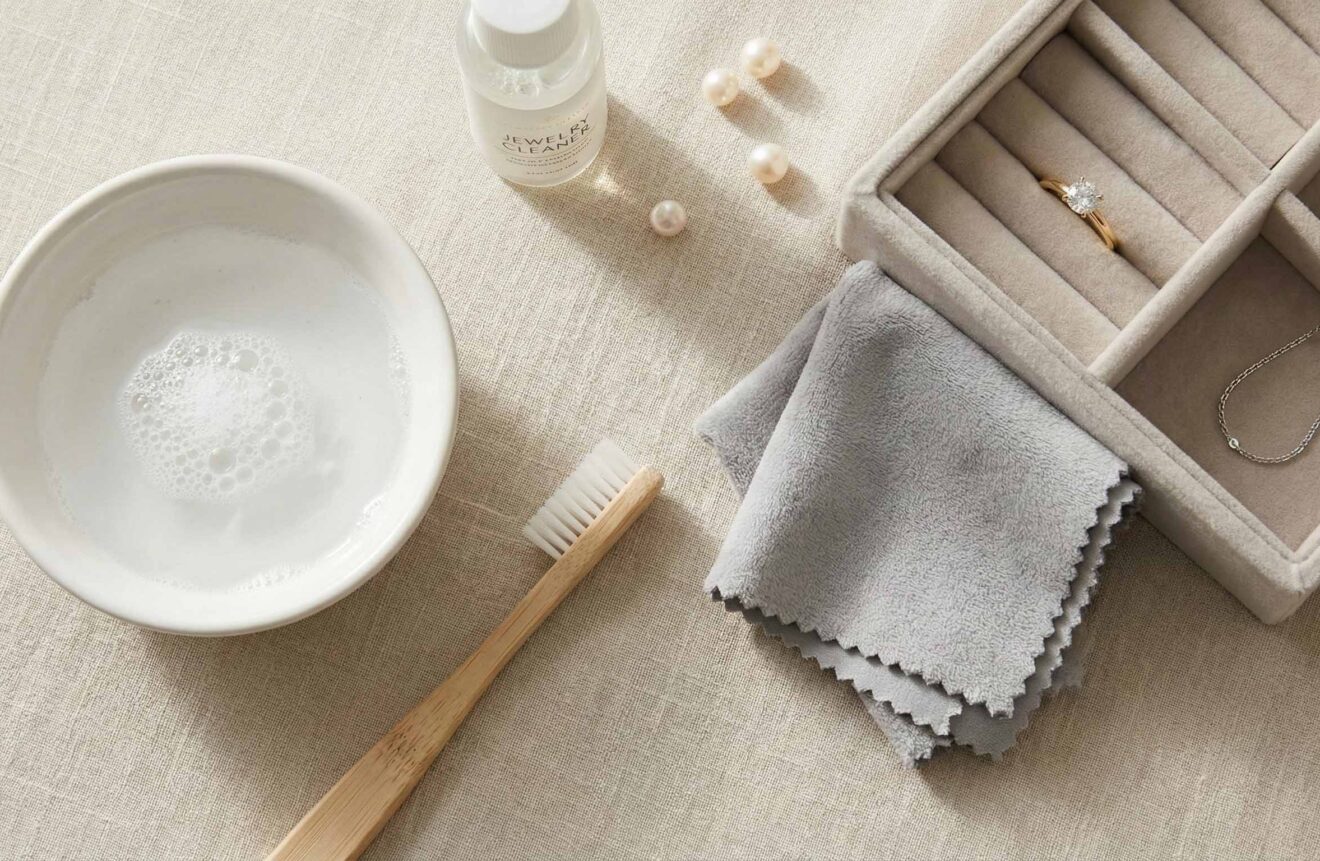
The Fix: Keep it simple and gentle. The best home cleaning solution is warm water mixed with a few drops of mild dish soap (like Dawn). Let the piece soak for ten minutes, then gently scrub behind the stone with an extremely soft-bristled baby toothbrush. Rinse well and pat dry with a lint-free cloth. That’s it.
4. You Are Ignoring the Mechanics
We look at the sparkle of the stone, but we rarely look at the metal holding it in place. Jewelry is an engineered object with tiny mechanics—prongs, clasps, and jump rings—that wear down with daily use.
Why you’re breaking it: It’s easy to assume that if a stone is set, it stays set forever. But snagging a sweater on a prong can pull it slightly away from the stone. Over time, gold wears down. You usually don’t notice a structural issue until you look down and realize your diamond is gone.
The Fix: The “Shake Test.” Occasionally, hold your ring near your ear and give it a little shake. If you hear a faint clicking sound, the stone is loose. More importantly, take your significant pieces to a professional jeweler once a year for a “check-up” to tighten prongs and check clasps.
5. Improper Storage (The Tangle Trap)
Tossing all your jewelry into one pouch or drawer is convenient at the moment, but damaging in the long run.
Why you’re breaking it: Jewelry items are different hardness levels. A diamond is the hardest substance on earth; if it rubs against your gold pendants or silver rings in a drawer, the diamond will scratch the metal. Furthermore, delicate chains that are jumbled together will inevitably knot, leading to breakage when you try to untangle them.
The Fix: Separation is key. Ideally, every piece should not touch another piece. Utilize jewelry boxes with individual slots, soft velvet pouches for separate items, or hang necklaces individually to prevent tangling.
Conclusion
Caring for jewelry doesn’t require a lot of time, just a little bit of mindfulness. By following these five golden rules, you ensure that the pieces you love today will remain vibrant, secure, and beautiful for a lifetime of wear.